Publisher Note
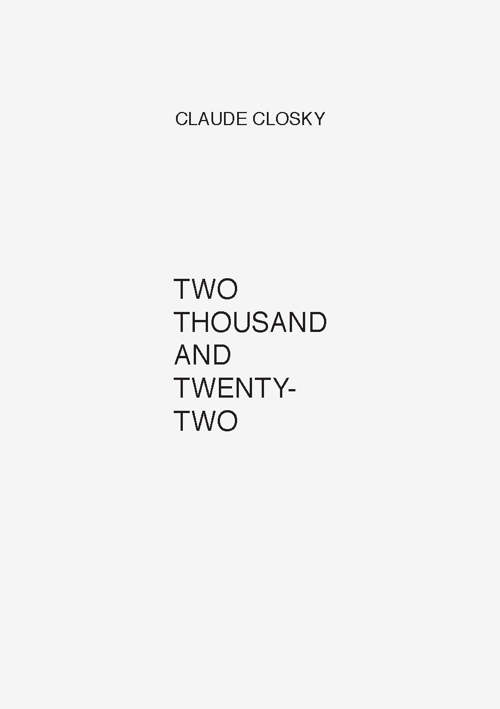
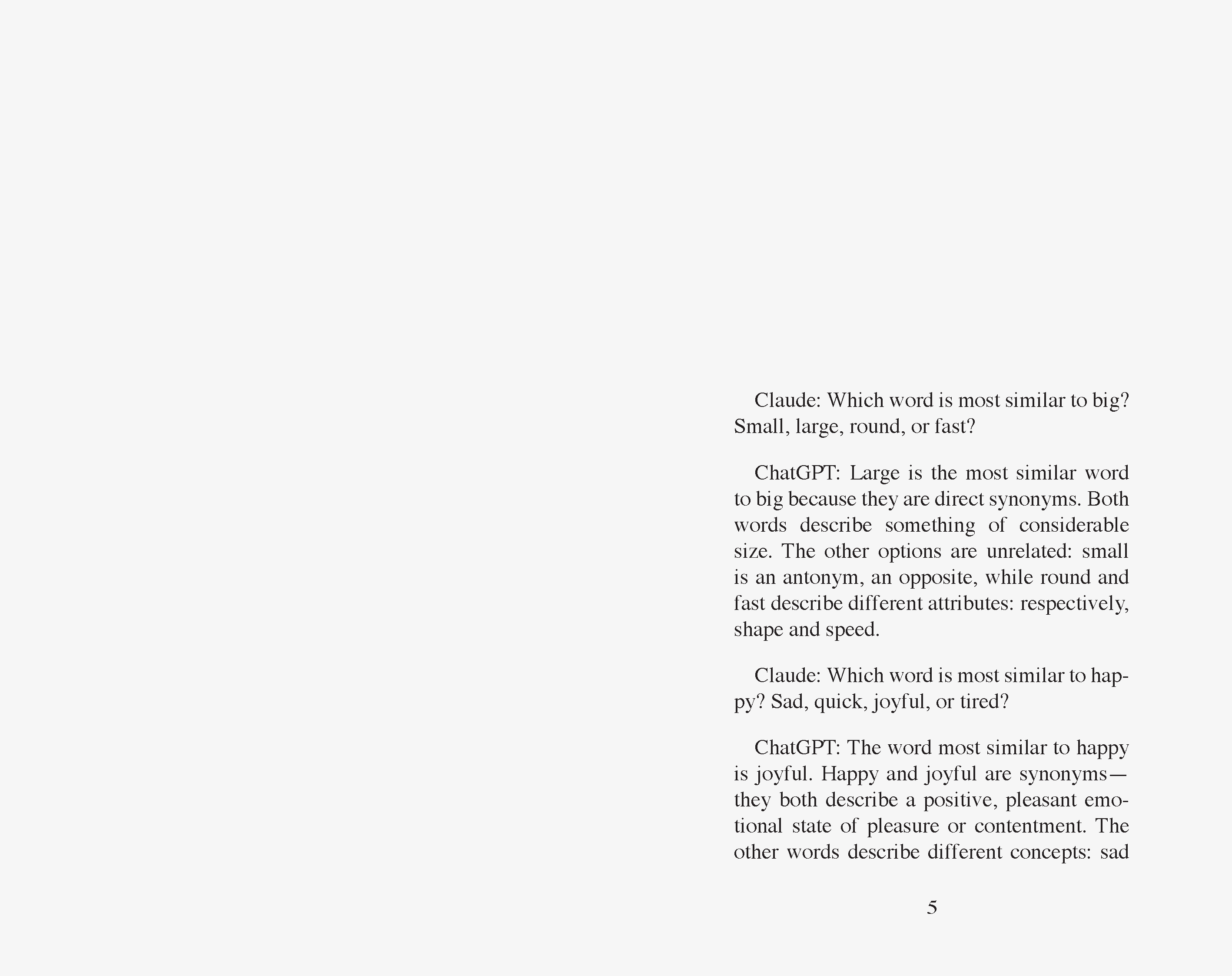
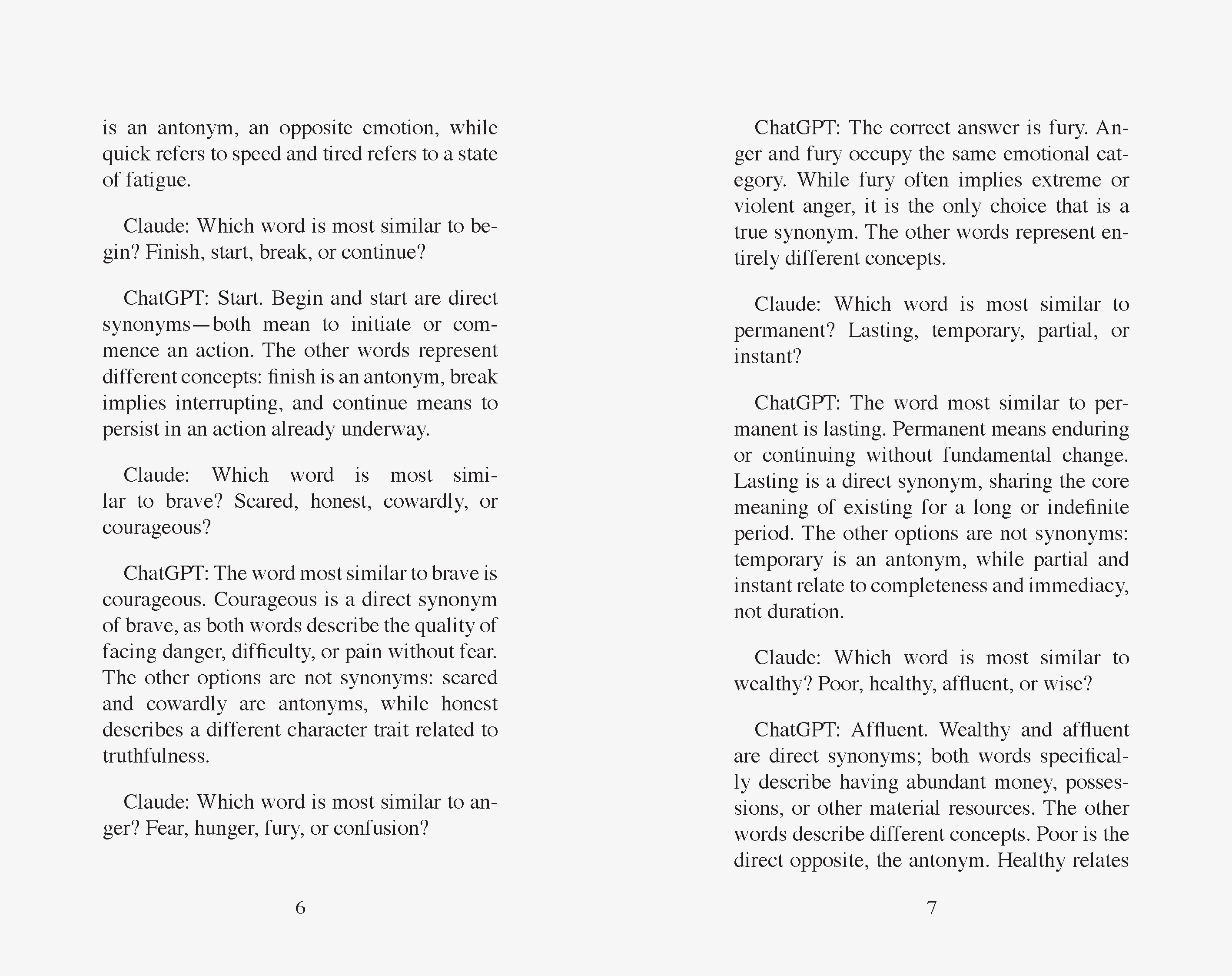
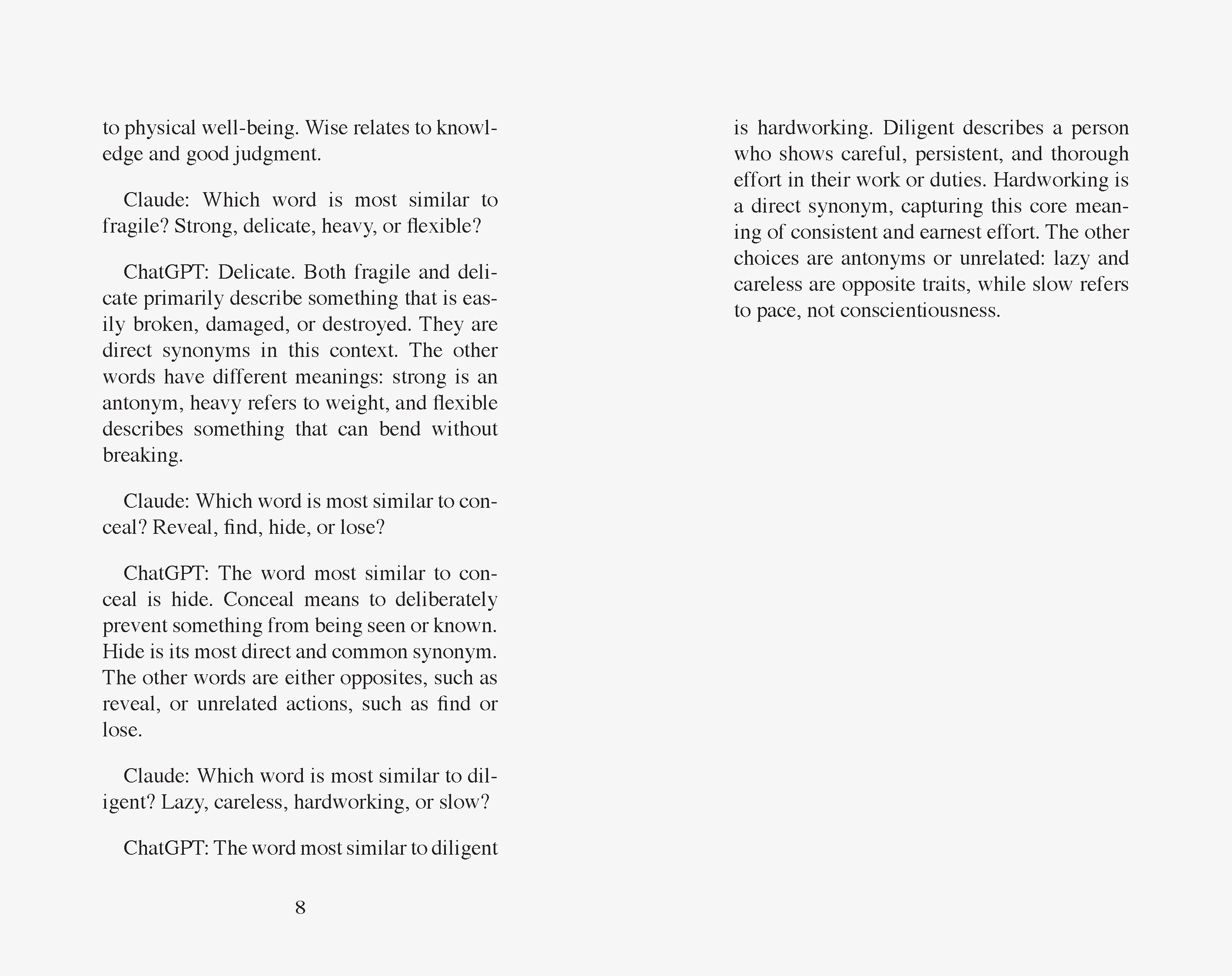
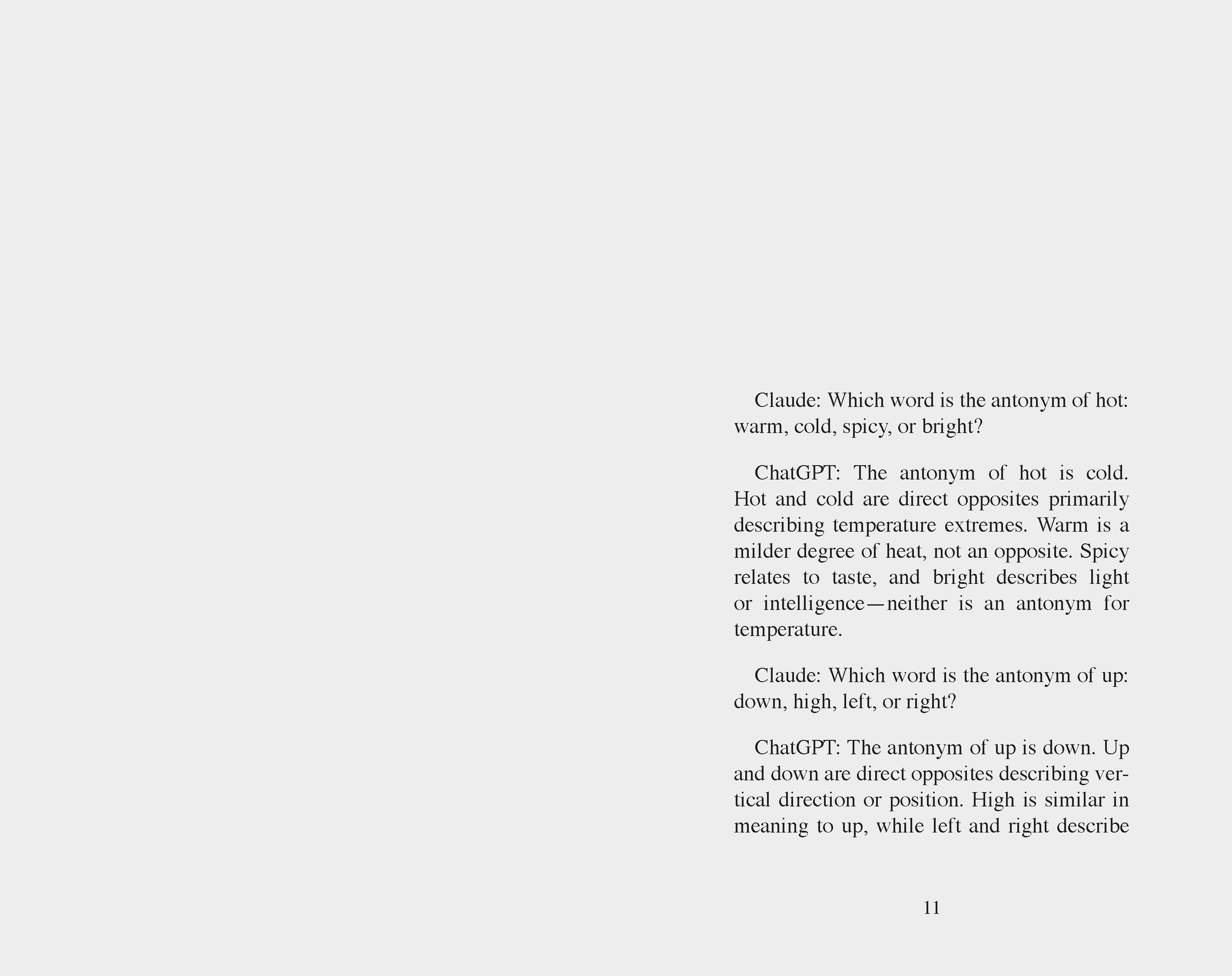
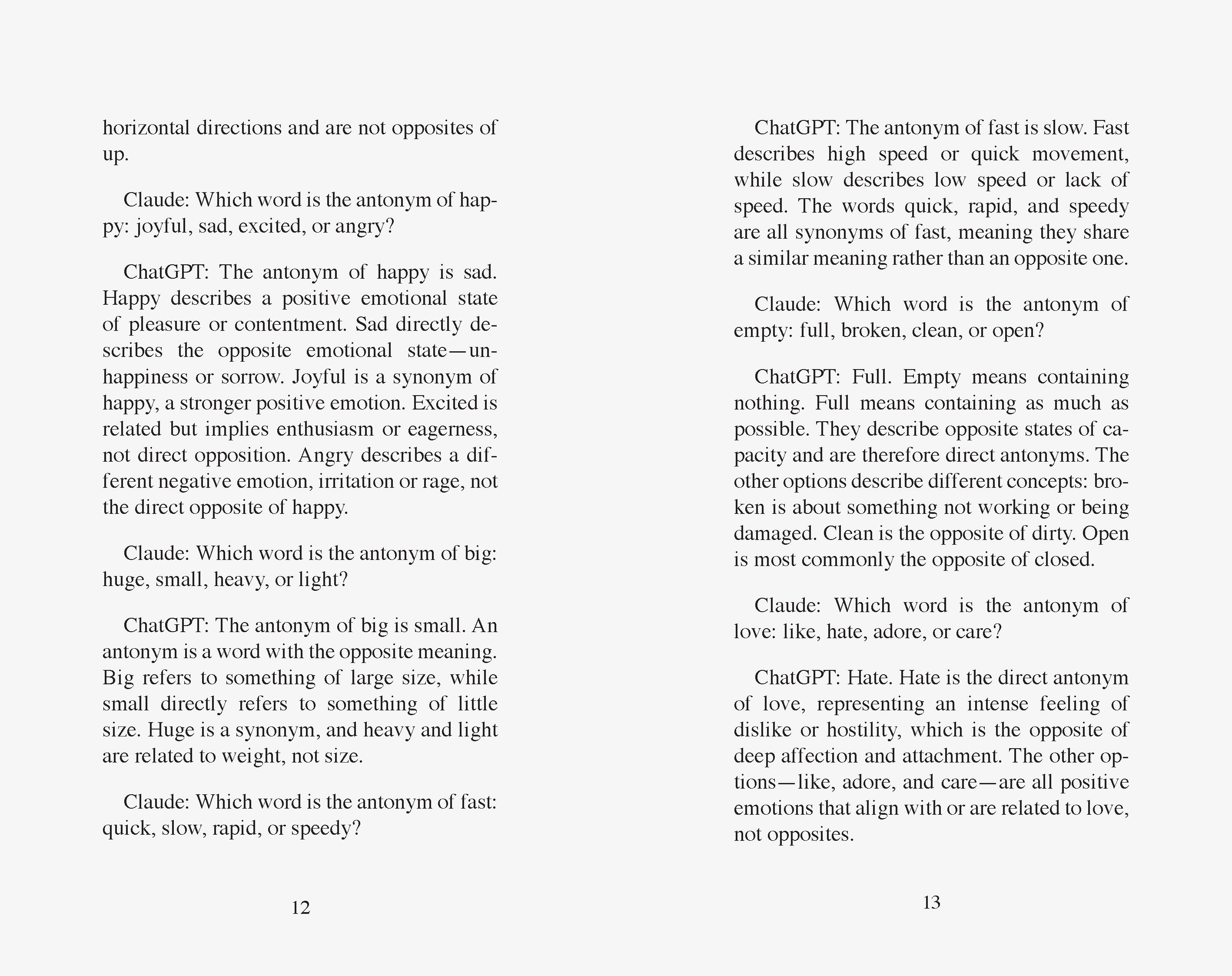
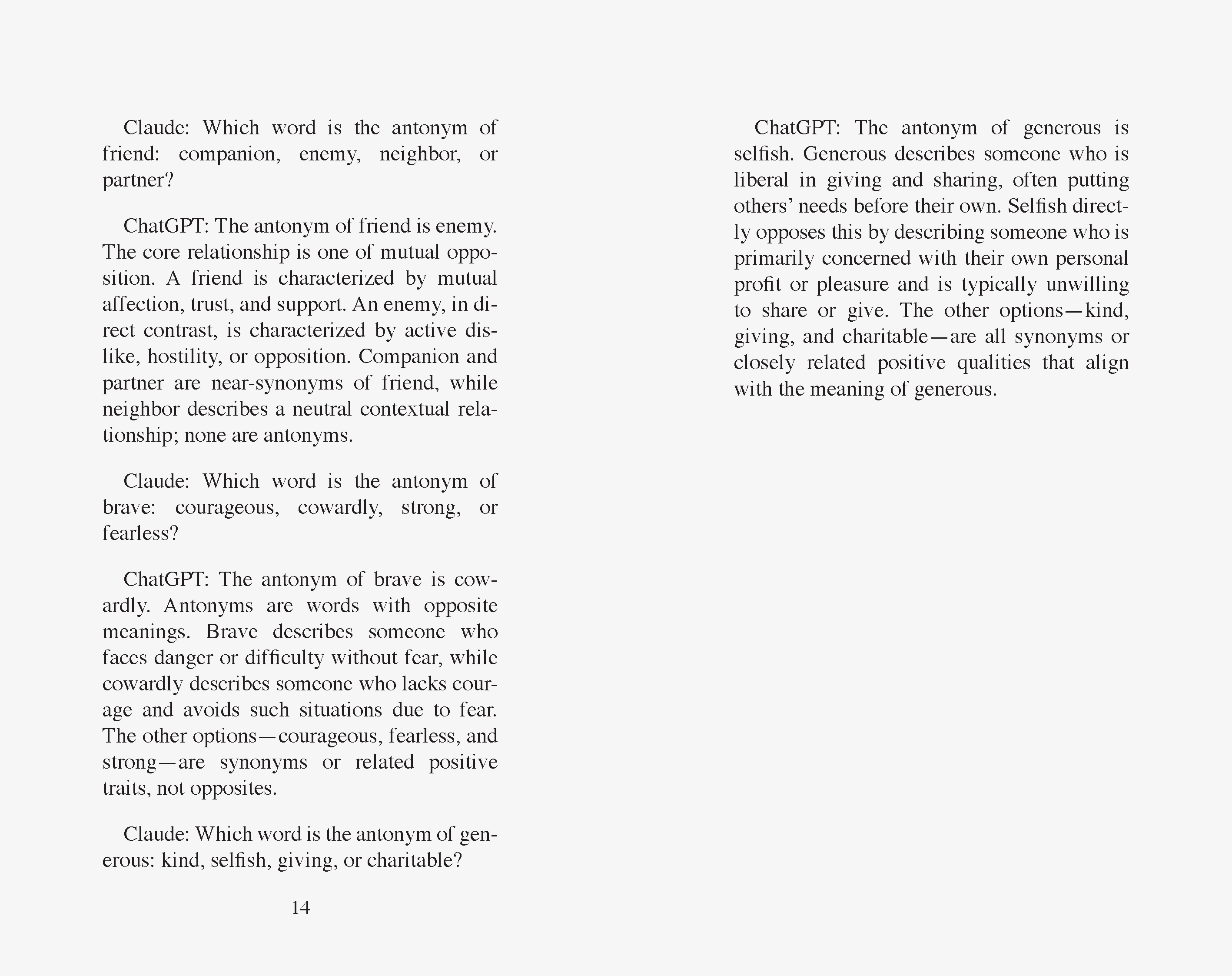
“A Conversation with ChatGPT” is a dialogue with an artificial intelligence. Throughout the book, I administer a standard IQ test to ChatGPT, which answers every question correctly while providing detailed explanations. There is a certain humor in subjecting an AI to an evaluation protocol that its very existence may have rendered obsolete. The publication is divided into ten sections—Word Meaning, Verbal Contrast, Similarities, Categories, Relationships, Reasoning, Logic, Judgment, Numbers, and Memory—each consisting of ten questions and answers, for a total of one hundred exchanges. Borrowing the familiar format of educational and psychological assessment tools, the book stages a confrontation between human systems for measuring intelligence and a machine capable of replicating their mechanisms.
What emerges is not so much a demonstration of artificial superiority as a reflection on the gradual delegation of certain cognitive operations. The work suggests that AI is now capable of handling both complex intellectual processes and the simpler mental operations that structure everyday thought. Memory, comparison, deduction, association, and judgment become functions that can be outsourced to computer systems.
By presenting intelligence as an automated sequence of correct responses, “A Conversation with ChatGPT” highlights the normative dimension of artificial intelligence itself. The dialogue unfolds in a world where thought becomes standardized, optimized, and predictable. Efficiency tends to reduce the space for doubt and invention.
Behind the neutrality of this exchange lies a broader political transition. As cognitive work migrates to machines, human activity is reduced to performing the material and logistical tasks necessary to sustain the physical world. In this shift, thought and the capacity for abstraction are moving toward artificial systems, while bodies remain assigned to production, maintenance, and services. The question arises not only regarding the future of intelligence, but also the redistribution of power, autonomy, and imagination in an increasingly automated society.
| Publisher | |
|---|---|
| Release Place | Paris, France |
| Release Date | 2026 |
| Credits |
Artist:
|
| Printrun | 300 |
| Identifiers |
ISBN-13:
9782909043456
|
| Work | |
|---|---|
| Topics | Ai, Artificial Intelligence |
| Object | |
|---|---|
| Dimensions | 12.0 × 19.0 × 0.5 cm |
| Interior | |
|---|---|
| Pages | 62 |
| Technique | Offset |
1 for sale